Shock is defined as a decrease in blood supply to the tissues as a result of a decrease in blood pressure.
We will learn what variables are responsible for blood pressure and what blood pressure is, in order to better understand the meaning and causes of shock.
- An issue with fluid volume: hypovolemic (sub-volume)
- An issue with vascular diameter: neural, anaphylactic (hypersensitive), and septic (infectious)
- An issue with heart output: heart-related shock
In other words, shock can be caused by massive blood/fluid loss (hypovolemic shock), as a result of abnormal enlargement of the blood vessels, or as a result of a cardiac disorder.
In the simplest sense, when a person is in a state of shock, the blood supply to the tissues is impaired, leading to damage to various systems and eventually systemic collapse as a result of oxygen and glucose deficiency.
In the case of damage caused by insufficient blood flow to body tissues and especially to the brain, a compensation mechanism is activated:
- Increased heart rate and breathing.
- Peripheral vasoconstriction – all organs of the body can cope with a shortage of blood for a limited time. Therefore, in situations involving shock, the body will reduce blood supply to the organs with a higher tolerance. In other words, blood flow to organs such as legs, arms, and digestive organs will be reduced and even stopped, so that blood remains in the main organs – the “triangle of life”.
We’ll detect peripheral vasoconstriction by checking for a non-palpable pulse in both hands!
As such, more signs of shock include:
- Decreased blood pressure.
- Pale and cold skin – this is because one of the functions of blood is to warm the body, and when the blood vessels in the periphery contract, the constriction causes a decrease in blood supply and body warming.
- Cold sweat.
- Decreased level of consciousness.
We’ll pay attention to the main signs: fast pulse, pale, moist, and cold skin.
The signs of hypovolemic shock were noted above.
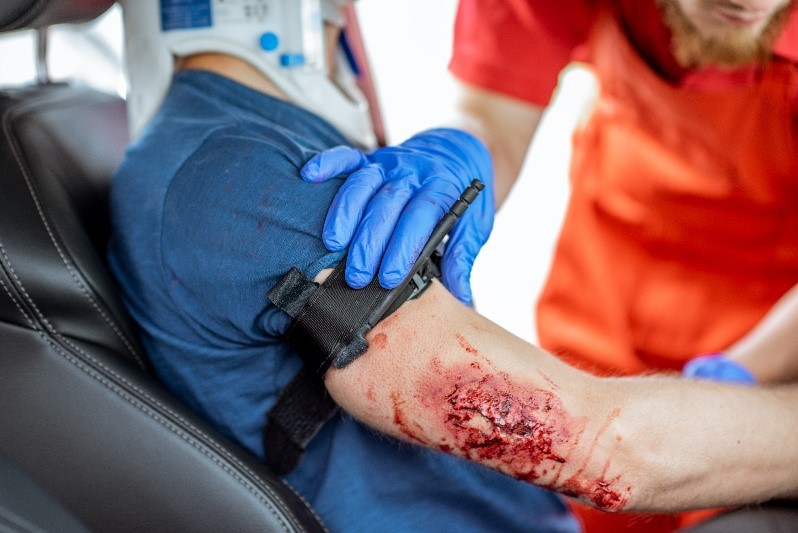
In the case of hemorrhagic shock due to bleeding, the treatment is the return of blood/blood volume by blood and/or fluid transfusion according to the cause of shock.
In ambulances, there is no blood transfusion since the blood needs to be kept at a constant low temperature, so as a first step, fluids can be administered until the patient arrives at the hospital.
In cases of shock due to dehydration, the treatment involves fluid recovery by drinking and infusion.
Because this shock is also caused by bleeding, if an injured man appears to show signs of shock (rapid pulse, pale, moist, and cold skin) without any visible bleeding wound, internal bleeding should be suspected.
Shock is divided into multiple degrees, or classes, according to the volume of blood/fluid lost in the patient:
- Compensated (nonprogressive) shock – the body manages to compensate for blood/fluid loss through adrenal secretion
- Decompensated (progressive) shock – the body goes undergoes selection, reducing blood supply to more tolerant systems: skin, skeletal and abdominal systems
- Irreversible shock – injury to the “triangle of life”, the body can no longer cope with this injury
Occurs as a result of a spinal cord injury that causes the body to lose its ability to contract blood vessels from the point of injury downward. As a result, blood vessels expand, blood pressure drops and the person goes into shock.
- Signs of shock noted above, and injury to the head/spine/cervical spine.
- Normal/slow pulse (if a head injury is involved).
- Red and warm skin from the site of injury downward (as a result of vasodilatation).
It is important to emphasize that when encountering neurogenic shock we won’t expect cold, pale skin, but rather warm, red skin.
Damage to the heart’s activity as a pump will interfere with blood flow and blood supply to the tissues.
Causes: Cardiac contusion (blunt injury bruise), myocardial infarction, arrhythmias, cardiac tamponade (fluid buildup between the casing and myocardium that creates pressure on the myocardium, preventing it from relaxing properly), pneumothorax, etc.
For example, in tension pneumothorax, the lung is pushed to the heart and prevents it from expanding fully. Without proper expansion, not enough blood will enter the heart for the next beat to supply properly.
Shock resulting from vasodilatation due to disease/infection. The infecting bacteria secrete toxins that cause blood vessels to expand. Septic shock usually develops slowly compared to other types of shock.
- Signs of shock as noted above
- Redness of the skin – as a result of vasodilation
- Itchiness
- Wheezing – a sign of bronchial constriction
- Typical rash – red and prominent spots on the skin
- Edema in the face, neck, and tongue
- Hoarseness as a result of edema in the vocal cords.
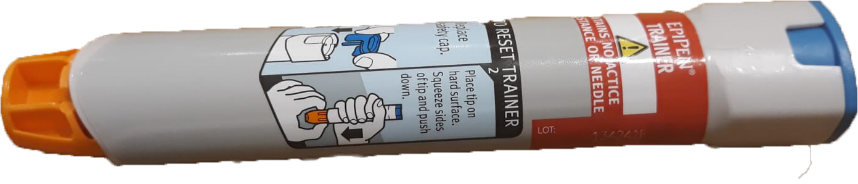
If the patient has an EpiPen syringe (epinephrine auto-injector), they should be advised to use it when exposed to the allergen and when the indicated signs of shock emerge.
 Students Login
 Teachers Login

 did you know?