22-Hour Course

Lesson no. 23

Poisonings

There are different types of substances that, upon exposure, can cause poisoning and emergency situations.

We can divide the types of poisonings according to the manner of exposure:


  • Injection – this type of poisoning can be caused by misuse of a drug (overdose) or deliberate injection of drugs. The signs of these poisonings are related to the type of substance injected, but their appearance will be rapid. These include euphoria, constricted pupils, sweating and reddening of the face or cold skin, psychiatric disorders, seizures, hallucinations, and respiratory inhibition. These are particularly dangerous poisonings because the substance is injected directly into the bloodstream and diffuses into the body.
  • Absorption – these are generally chemicals and pesticides. These substances pass through the skin into our bodies. The signs of poisoning by absorption range from localized signs (red skin, burns, pain) to systemic signs.
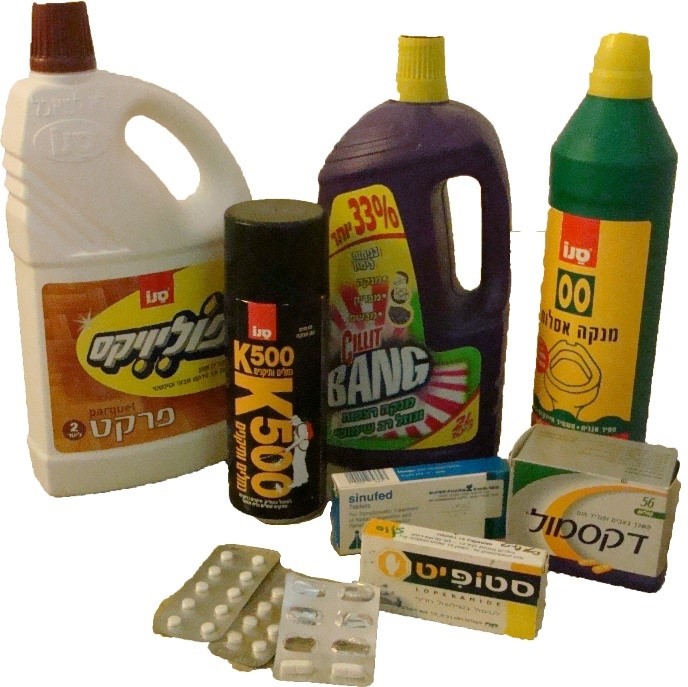
  • Ingestion – the most common poisoning. Usually, the substances that cause them are cleaning agents (acids/bases) and medicines. Such poisonings can occur in the general population: in children as a result of curiosity, in the elderly as a result of confusion and accidental double dosage of drugs, and in young people as well as in adults as a result of excessive alcohol drinking. Poisoning can be detected from details of the incident (syringes on the floor, medication bottles, bleach bottles). Signs: respiratory problems, nausea and vomiting, abdominal pain, a decline in the level of consciousness, change in pupil diameter, seizures, and diarrhea.
Treatment

  • For absorption poisoning: Undress and rinse the patient thoroughly, for at least 10 minutes. If it is a powdery substance, the material should first be shaken off in the open-air followed by a rinse. If the injury is to one eye, it should be washed in the faucet so that the damaged eye is down. If it is up, the material may pass from it to the other eye.
  • Evacuate the injured person to the hospital. It is important to identify the substance/cause of poisoning and bring it with the patient to the hospital.
  • Do not try to encourage vomiting and do not try to neutralize the acid with a base or vice versa!
  • The victim should not eat/drink.

Gas Inhalation

Carbon Monoxide (CO) Poisoning

Carbon Monoxide (CO) poisoning is caused by burning wood among other things.


The problem with carbon monoxide gas is that its affinity (attraction) for hemoglobin is hundreds of times greater than the affinity of oxygen for hemoglobin, so hemoglobin binds to it instead of oxygen. The patient will breathe normally but cellular death will occur as a result of oxygen deprivation.


When in the field, the only way to detect carbon monoxide poisoning is according to the scene of the incident and details of the incident.

Signs

  • Soot around mouth and lips
  • Exiting from the scene of a fire
  • Hoarseness and coughing


Headaches, dizziness, and uncharacteristic behavior may also indicate poisoning as a result of gas.

Treatment

  • Providing medical oxygen at 100% concentration by an oxygen mask.


By giving the patient oxygen at 100% concentration, we increase the affinity of the oxygen to the hemoglobin and relink the oxygen to the hemoglobin, which had carbon monoxide gas linked in its place.


  • Every patient with carbon monoxide poisoning should be evacuated to a hospital where their gas levels can be monitered.

Inhaled Cooking Gas

Cooking gas is a colorless, odorless, and tasteless gas (the odor is synthetically added to be able to detect leaks), and is in fact not toxic.


The problem with cooking gas is that, in its simplest form, it is inhaled into the body instead of normal air and therefore occupies volume in the lungs that is meant for air, causing less oxygen to enter through the lungs into the bloodstream.


A diagnosis is based on details of the incident and the circumstances of the event. Treatment is leaving the area and administering medical oxygen by an oxygen mask.

Cyanide Poisoning

Cyanide is a by-product of burning rubber and textile products. As the cyanide is inhaled and enters the bloodstream, it impairs the ability of cells to produce energy, causing cellular death.

Signs

Most noticeable signs of poisoning:


  • Details of the incident
  • Bradycardia
  • Decrease in blood pressure (and then tachycardia followed by resumed bradycardia)
  • Shortness of breath
  • Chest pains
  • Headaches
  • Dizziness
  • Nausea

Treatment

  • It is very important to take the poisoned patient to a hospital via an advanced-life-support ambulance (Natan, נט״נ) to start the antidote (neutralization) treatment for cyanide as soon as possible
  • Provide medical oxygen at 100% to the patient by an oxygen mask.

Inhalation of Hot Gases

Typical injury to people who came out of a scene where there was a fire, and inhaled hot smoke into the lungs.


The injury includes burning of the cilia (small hairs on the walls of the airway aimed at removing contaminants), accumulation of airway soot, airway infection, and severe respiratory edema (as a result of airway burns) which can then result in death from suffocation.

Signs

  • Soot around mouth and lips
  • Exit from the scene of a fire
  • Swelling of the tongue and severe cough

Treatment

Evacuate the patient to a hospital as soon as possible with the help of an advanced-life-support ambulance in case the airway collapses from the edema and the patient needs ventilation through a tracheal tube (tubus).

Accessibility