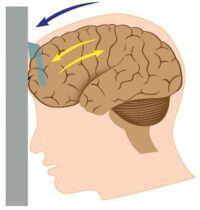
- Temporary loss of consciousness
- Loss of short term memory
- Nausea and vomiting (important signs)
- Headaches, dizziness
- Blurry vision
- Confusion
We are unable to treat a concussion victim other than taking them to the hospital to assess the severity of the condition and performing extensive tests.
Cuts on the scalp are usually not life-threatening, as the scalp contains only small blood vessels, but it is a danger to people taking blood thinners (anti-coagulants) and infants, as their heads are larger than the body and therefore can bleed more, relative to their size.
If we come across such a cut, treatment will begin by stopping the bleeding, and then cleaning the area. This is usually only a superficial cut. If not, the injured person should be evacuated for stitches/gluing by a medical team.
There are quite a few types of skull fractures. Most signs will include pain, a story of a previous blow to the head, sensitivity in the area and even a change in the visible shape of the skull. We will make sure not to touch the area, for fear of worsening the injury, and contact a medical team.
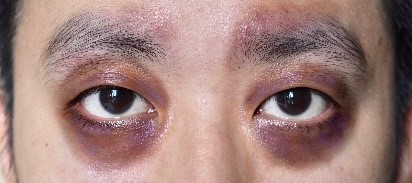
Basilar skull fractures are very dangerous because the base of the skull is the floor that holds the brain in place and a fracture in this position can cause blunt and sharp brain injury.
The unique signs of basilar skull fractures are hematomas around the eyes (raccoon’s eyes) and in the mastoid (behind the ears, battle signs) and the discharge of CSF (intracranial fluid, cerebrospinal fluid) from the nose and ears.
Also, related signs of head injury such as change in consciousness, nausea, vomiting, dizziness, etc.
- These signs are late-stage indicators of the injury. Nearer to its occurrence, we will have no way of identifying the location of the fracture.
.
Intracranial hemorrhages can occur between any of the brain’s protective layers. The cause of bleeding can be blunt trauma, spontaneous, high blood pressure and more.
The bleeding can be:
- Between the dura mater and the skull
- Between the dura and the arachnoid membranes
- Between the arachnoid and the pia membranes
- Within the brain tissue under the pia membrane
In this course we will not delve into the unique features of each type of bleeding. However, it is important to remember that some patients will have symptoms later. Lack of symptoms does not indicate lack of bleeding.
If so, why is bleeding inside the skull so dangerous?
Mechanism of Intracranial Hemorrhage:
Increased intracranial pressure as a result of the increased bleeding can lead to the Cushing Triangle – increase in blood pressure, slowing heart rate and changes in respiratory pattern.
The problem with spinal/cervical spine injuries is that at the pre-hospital level it is almost impossible to diagnose such injuries, but can only be suspected according to details of the incident (car accident/fall from above, etc.); back paralysis from a specific point or flushed, hot and dry skin from the point of impact on down.
The danger of this injury is the exacerbation of the existing spinal injury by moving/transferring the patient. Ways to move/evacuate such an injured patient will be discussed in the practical lesson.
 Students Login
 Teachers Login
 did you know